A, U or zigzag?
A, U or zigzag? Athletes with ACL reconstruction follow three major psychological patterns: Results from a retrospective evaluation of a local ACL register
Traditionally, the emotions experienced by athletes after ACL reconstruction are described as linear or U-shaped. This already suggests that these emotional trajectories may vary between athletes. How athletes cope with their emotions can depend on various personal characteristics, such as sex, age, and their wish to return to their previous level of sport.
The aim of this study was therefore to identify the different emotional patterns athletes may experience after ACL reconstruction. We assessed emotional responses at four key time points using the short ACL-RSI and the PHOSA-ACLR questionnaires: preoperatively, at 6 weeks post-op, at 3 months post-op, and at 6 months post-op.
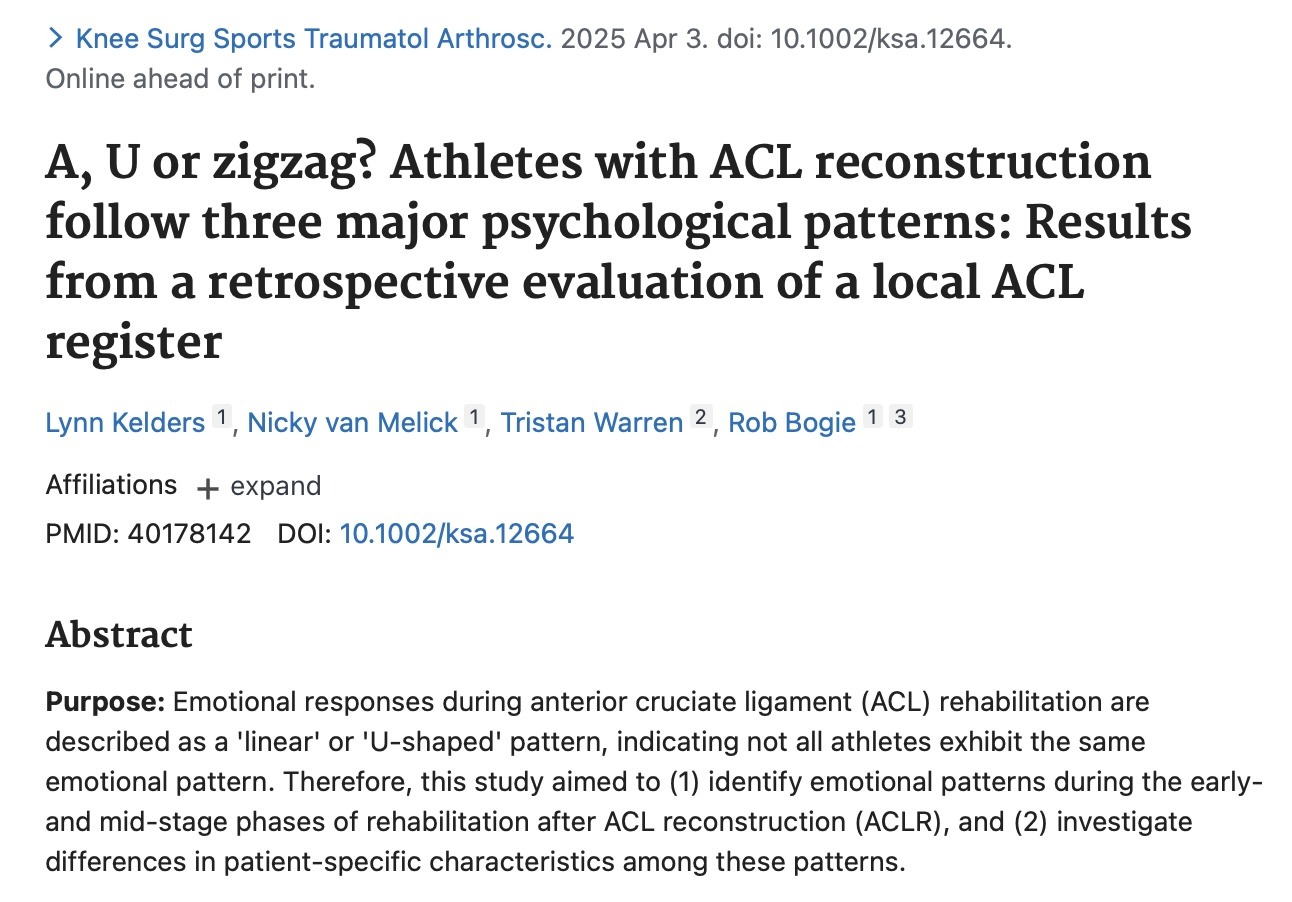
The key findings of this study are:
- Three distinct emotional patterns emerged from our analysis:
- An A-shaped pattern, where athletes begin with low emotional responses preoperatively, see an increase in emotions during the first 6 weeks post-surgery, followed by a decline.
- A U-shaped pattern, where athletes start with high emotional scores before surgery, which drop in the first 3 months post-op and rise again afterward.
- A zigzag pattern, where athletes begin with high emotional levels preoperatively, followed by fluctuations after surgery.
- These patterns were observed for both questionnaires, but were not always the same within individuals across the two questionnaires. This suggests that the questionnaires measure distinct emotional responses. The short ACL-RSI assesses psychological readiness to return to sport, while the PHOSA-ACLR measures fear of (re)injury during sport-specific movements. In practice, it is therefore valuable to use both questionnaires side by side.
- The emotional patterns were partly influenced by athlete characteristics:
- Recreational athletes who do not compete were less likely to show an A-shaped pattern on the short ACL-RSI.
- Athletes with an A-shaped pattern on the PHOSA-ACLR were younger than those with a zigzag pattern on the same questionnaire
Based on these results, we can better inform athletes undergoing ACL reconstruction about what they might expect mentally during rehabilitation. Moreover, these insights open the door to developing more personalized care plans.
“ ”
MOREOVER, THESE INSIGHTS OPEN THE DOOR TO DEVELOPING MORE PERSONALIZED CARE PLANS.
Reference:
- Kelders L, van Melick N, Warren T, Bogie R. A, U or zigzag? Athletes with ACL reconstruction follow three major psychological patterns: results from a retrospective evaluation of a local ACL register. Knee Surg Sports Traumatol Arthrosc 2025, Apr 3. Online ahead of print. DOI: 10.1002/ksa.12664.
